Welcome to the Group for Precision Physics at Low Energy
We perform precision particle physics experiments at low energies, studying fundamental symmetries and interactions with neutrons and muons. Our group is involved in several experiments such as muonic hydrogen and helium, muon cooling, muonium production and neutron electron dipole moment.
Efrain P. Segarra, one of our postdoctoral researchers, was awarded the 2025 CHIPP Postdoc Prize for his outstanding contributions to the n2EDM experiment at PSI. His efforts led to the first Ramsey and EDM test measurements, major improvements in magnetic-field uniformity and polarization control, and a novel method to extract the ultracold neutron spectrum and storage properties.
We warmly congratulate Efrain on this well-deserved recognition!
Luz Sanchez-Real Zielniewicz, one of our PhD students, was awarded one of three “Best Poster Prizes” at the Joint Annual Meeting 2025 of the Swiss Physical Society and the Austrian Physical Society, held from 18-22 August 2025 in Vienna, for her poster titled “Cesium Magnetometry for the n2EDM Experiment.”
We congratulate Luz on this well-deserved recognition!
On July 21–22, 2025, our group went on a summer trip to Gornergrat/Zermatt. We enjoyed a group hike with stunning views of the Matterhorn, glaciers, and mountain lakes.
A big thank you to Katharina, Luz, and Sergey for organizing the outing. The trip was smooth, relaxing, and full of fresh mountain air.
Special Communication
Information on the coronavirus
The ETH task force headed by the Vice President for Infrastructure is monitoring developments in the coronavirus pandemic and will continue to draw up suitable measures as necessary. You can find constantly updated information on the coronavirus web page.
Annette Oxenius has been appointed ETH Vice President for Research. From 1 August 2025, she will assume responsibility for research development and promotion at ETH Zurich. The 56-year-old Swiss national is an esteemed immunologist and professor at the ETH Department of Biology.
During the COVID-19 pandemic, hospitals often became hubs of infection. Researchers from ETH Zurich, EPFL and the ISI Foundation are developing a wearable tracking system for healthcare facilities that can identify the risks of infections. Initial tests in Switzerland and Africa show its potential.
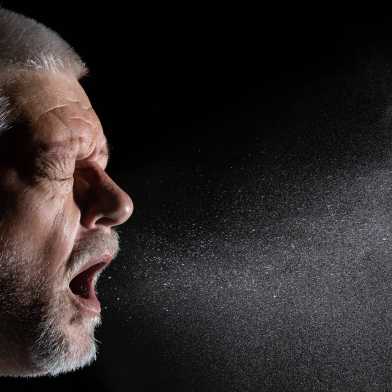
A new study by various Swiss universities shows that aerosols in indoor air can vary in acidity. This acidity determines how long viruses remain infectious in the air – with profound implications for virus transmission and strategies to contain it.